
Reducing Welded Joints in High-Pressure Piping Systems
Growing Complexity in Energy and Process Industries
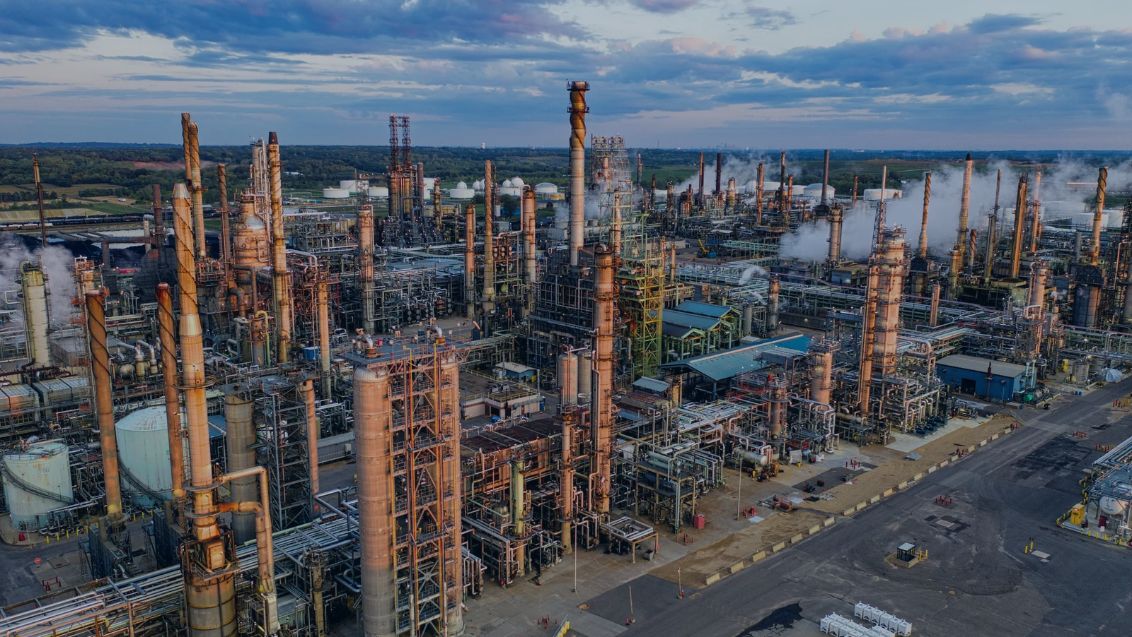
Ongoing investments in energy infrastructure are driving demand for increasingly complex piping systems. Whether in power generation, refineries, process plants, hydrogen facilities, or carbon capture projects, piping systems are often required to withstand high pressures, elevated temperatures, and demanding operating conditions.
At the same time, project schedules remain challenging. EPC contractors and fabricators are under pressure to deliver large volumes of pipe assemblies while maintaining strict quality requirements.
As facilities become more complex, the design and fabrication of piping systems are becoming critical factors for project efficiency, inspection effort, and long-term operational reliability.
Why Piping Design Matters
Modern industrial facilities require three-dimensional pipe routing around equipment, steel structures, and existing infrastructure.
Traditionally, many of these geometries are manufactured using straight pipe sections and welded elbows. However, every additional fitting increases fabrication effort and introduces another welded connection that must comply with project-specific quality requirements.
In high-pressure applications, this typically results in:
- Additional welding operations
- Increased non-destructive testing (NDT) requirements
- More extensive documentation and quality records
- Additional potential leak paths during operation
- Longer fabrication times
These effects become particularly significant in large-scale energy and industrial projects, where thousands of welds may be required throughout a piping network.
Manufacturing Challenges in Large-Scale Projects
Fabricators and plant constructors regularly face similar challenges when manufacturing complex piping systems.
Welding Effort
Every elbow requires at least two welds. As project sizes increase, welding becomes a significant cost and scheduling factor.
Quality Control and Inspection
Each weld may require visual inspection, dimensional verification, and, depending on codes and project specifications, additional NDT procedures such as radiographic or ultrasonic testing.
Leak Prevention
In critical service applications, every welded joint represents a potential leakage point. Reducing the total number of welds can therefore contribute to improved system integrity.
Material Handling and Logistics
Manufacturing and managing large quantities of elbows, fittings, and intermediate components increases logistical complexity throughout the fabrication process.
Repeatability
Maintaining dimensional accuracy across large numbers of pipe spools is essential to avoid installation issues during assembly and commissioning.
How Tube Bending Can Reduce Fabrication Effort
One approach to addressing these challenges is the use of cold bending technology.
Rather than assembling a pipe geometry from multiple straight sections and welded elbows, a continuous pipe can be formed into the required shape through a controlled bending process. This enables multiple bends to be produced within a single workpiece.
As a result:
- The number of welded joints can be reduced.
- Inspection effort may decrease.
- Potential leak points can be minimized.
- Complex three-dimensional geometries can be manufactured with consistent repeatability.
- Fabrication becomes less dependent on large numbers of individual fittings.
These advantages are particularly relevant for high-pressure piping systems, process plants and large-scale infrastructure projects where reliability and documented quality are critical requirements.
Tube Bending for Energy and Process Applications
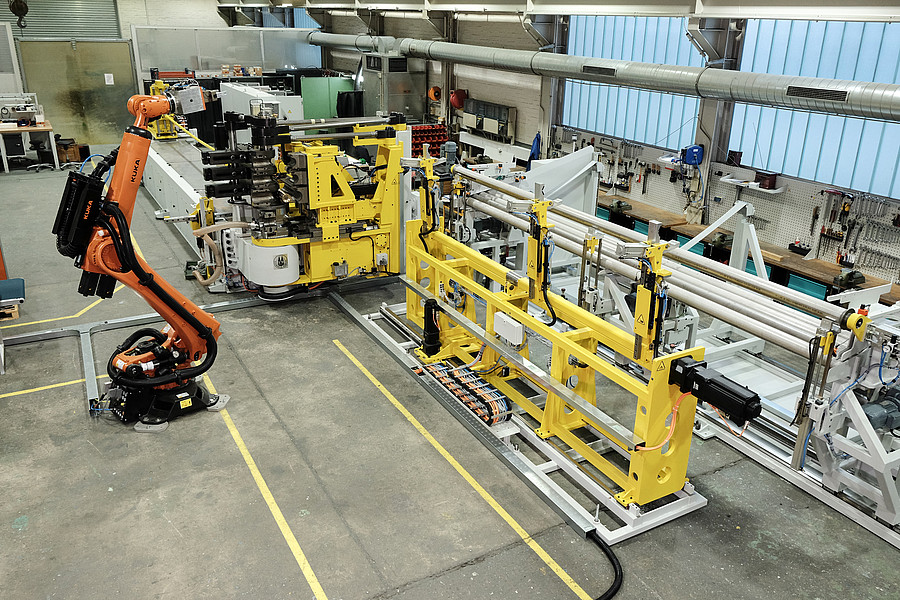
Schwarze-Robitec develops CNC-controlled tube and pipe bending machines for applications involving large diameters, demanding materials and thick wall sections.
Depending on project requirements, pipes can be bent to tight radii while maintaining dimensional accuracy. For repetitive manufacturing processes, automated measurement and correction systems help ensure consistent bending results.
For boiler and power plant construction, Schwarze-Robitec also provides dedicated solutions for bending complete membrane walls. The FL series is designed for membrane walls up to 3,600 mm in width and 25,000 mm in length, helping reduce alignment and assembly effort during boiler construction.
These capabilities are particularly relevant for:
- Power generation
- Boiler construction
- Refineries
- Oil and gas facilities
- Process industries
- Industrial piping systems
Conclusion
As energy and industrial projects continue to increase in scale and complexity, fabrication efficiency becomes increasingly important.
Reducing the number of welded joints can help lower inspection effort, simplify manufacturing processes and reduce the number of potential leak points. For many high-pressure and process-critical applications, tube bending therefore represents an important manufacturing method that can support both production efficiency and long-term operational reliability.