Tube bending machines in shipbuilding as a competitive factor
Competitiveness in shipbuilding is decided in production
Shipbuilding has always been technology‑driven. In recent years, however, the focus has shifted noticeably. Competitive advantage is no longer defined solely by innovative ship concepts or propulsion systems, but increasingly by the efficiency and stability of production processes. Shipyards and plant manufacturers are under pressure to realise complex systems faster while maintaining consistently high quality.
In this environment, tube processing has gained strategic importance. It directly affects lead times, production reliability and the ability to deliver complex projects on schedule.
Pipe systems as a structural backbone of modern ships
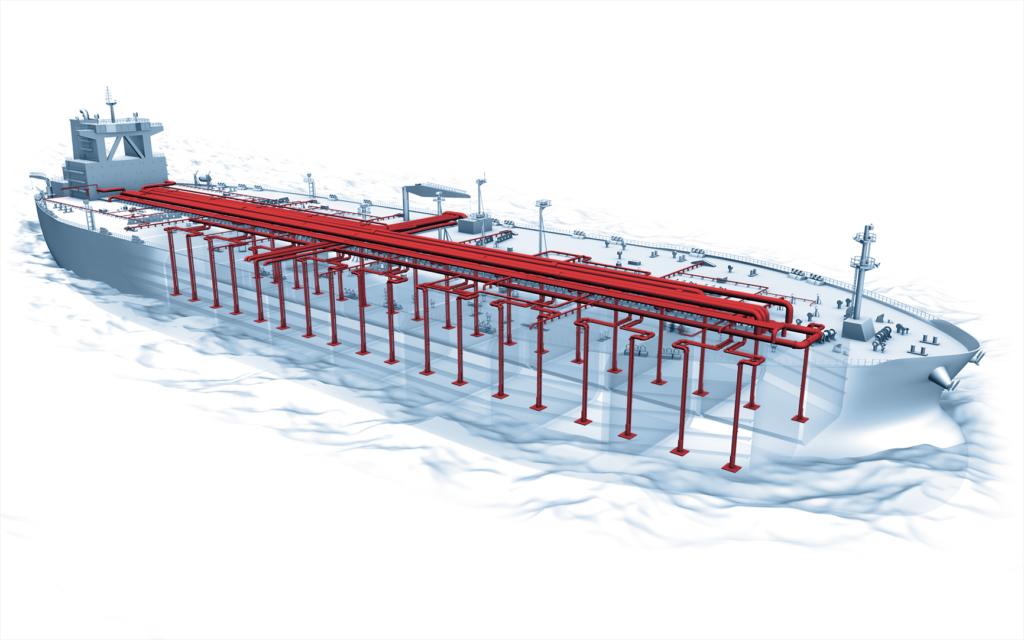
Pipe systems form the functional backbone of almost every vessel. They supply engines, auxiliary systems and technical equipment with a wide range of media. As ships become more integrated and technically sophisticated, the number and density of these pipe systems continue to increase – while available installation space remains limited.
As a result, the requirements for pipe geometry, accuracy, and repeatability rise significantly. The way pipes are manufactured has a direct impact on ship architecture, installation effort and long‑term serviceability.
In shipbuilding, precision is particularly critical. Even minor angular deviations can result in pipes that do not fit correctly during final assembly. High bending accuracy and repeatability are therefore essential to ensure smooth installation processes and to avoid costly rework.
Tight bending radii create real design freedom
One of the key parameters in this context is the achievable bending radius. The smaller the radius, the more compact pipe routing can be designed. This allows shorter runs, more efficient use of space and fewer clashes with other trades.
For large pipe diameters, achieving tight radii is technically demanding. Only robust tube bending machines designed for high bending moments can deliver such geometries reliably and with consistent quality. In shipbuilding, this capability translates directly into structural and logistical advantages.
Heavy‑duty tube bending machines as an industrial basis
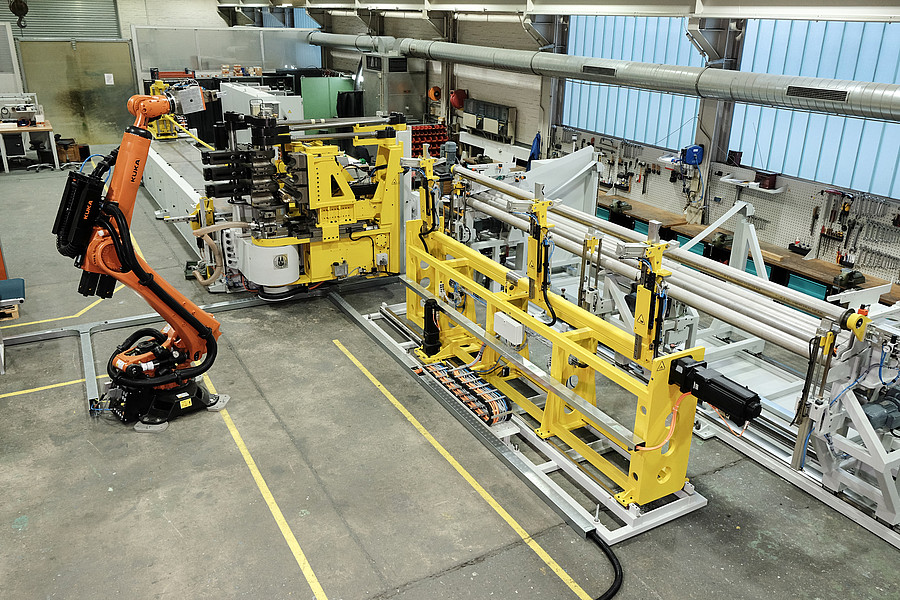
Heavy‑duty tube bending machines are designed for extreme and continuous loads. In shipbuilding, the decisive factor is not peak performance, but the ability to maintain accuracy and process stability over long production cycles and varying project requirements.
Reliable heavy‑duty bending technology reduces rework, minimises correction loops and increases predictability in downstream processes such as assembly and installation.
In addition, long‑term production success often relies on proven machine concepts. Heavy‑duty tube bending machines are designed for durability and continuous operation, delivering reliable performance even under demanding production conditions. Their robust construction enables decades of productive use, making them a sustainable investment for shipyards and fabricators alike.
Process reliability depends on suitable machine concepts
Beyond bending force alone, machine concepts play a crucial role. Multi‑groove tool solutions allow different pipe dimensions to be processed on a single machine with minimal changeover time.
NC‑controlled bending ensures reproducible three‑dimensional geometries, even for complex pipe systems.
Key technical requirements for tube bending machines in shipbuilding include:
- high machine stiffness for large pipe dimensions
- maximum precision and repeatability for perfectly fitting pipe systems
- consistent precision under continuous load
- reliable forming of demanding materials
- integration into existing production environments
- robust and durable machine concepts for long-term industrial use
Conclusion: tube bending machines in shipbuilding as a quiet driver of competitiveness
Tube bending machines become strategically relevant in shipbuilding when they combine design freedom, process reliability and industrial robustness. Heavy‑duty tube bending does not optimise isolated components – it strengthens entire production chains.
Precision and reliability are particularly important in this context. Only accurately bent pipes ensure efficient assembly without time‑consuming adjustments on site. At the same time, proven and durable machine concepts help maintain this level of performance consistently over many years of operation.
Companies that treat tube fabrication as a strategic capability secure long‑term advantages in efficiency, planning reliability and competitiveness.